In early education, imaginative play isn’t just fun — it’s foundational. Pretend play sparks creativity, supports social-emotional development, and builds problem-solving skills that last a lifetime. Whether you’re running a Montessori classroom, a preschool, or a daycare program, incorporating pretend play furniture and activities helps children explore the world through role play and storytelling.
Why Pretend Play Is Important
Pretend play is so much more than a way to let children use their imaginations during free time. It may help them develop important skills that will last a lifetime.
A 2016 study found that when kids engage in pretend play, they have improved executive function skills, which help them plan, focus, and regulate their feelings and emotions. While it’s a small study, it does demonstrate the importance of pretend play in the classroom.
Beyond the benefits for executive functioning skills, pretend play helps children:
- Express emotions and build empathy
- Practice real-world roles, like cooking, cleaning, and nurturing
- Develop language and storytelling skills
- Express themselves creatively
- Strengthen cooperation and sharing skills
- Learn how to solve problems (without hitting or biting!)
Creating a Space for Pretend Play
Supporting pretend play in the classroom starts with creating a space that encourages imagination. Here’s what to consider for yours.
Plan Your Space
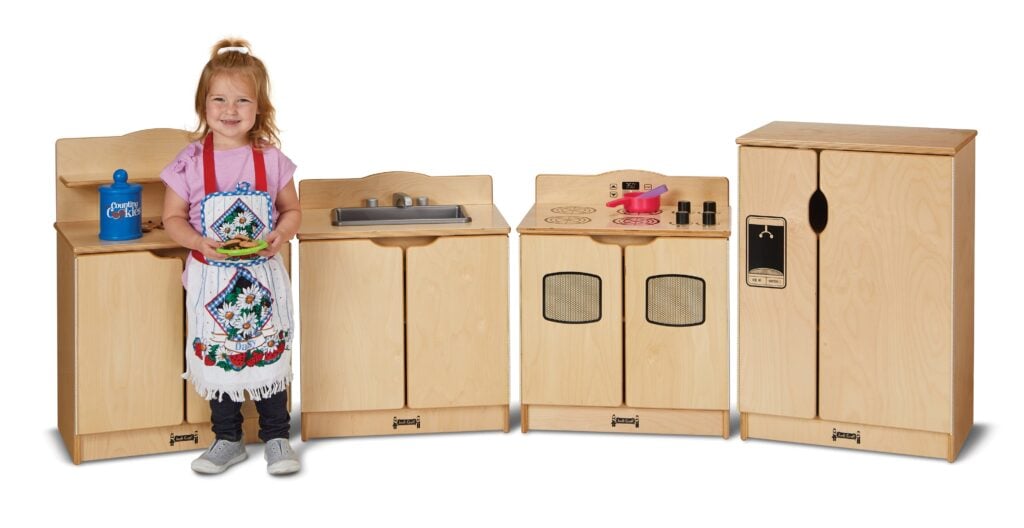
Like a dedicated reading corner, one of the best ways to encourage children to engage in dramatic and pretend play is to set up a dedicated area for it. Pick an area of your classroom — or multiple areas if your space allows it — where kids can flex their imagination skills. One area could be devoted to puppet play, another for dress-up, and a third could have a play kitchen or family room.
Not sure where to start? Use our space planner tool to design the perfect classroom setup.
Pick the Right Furniture
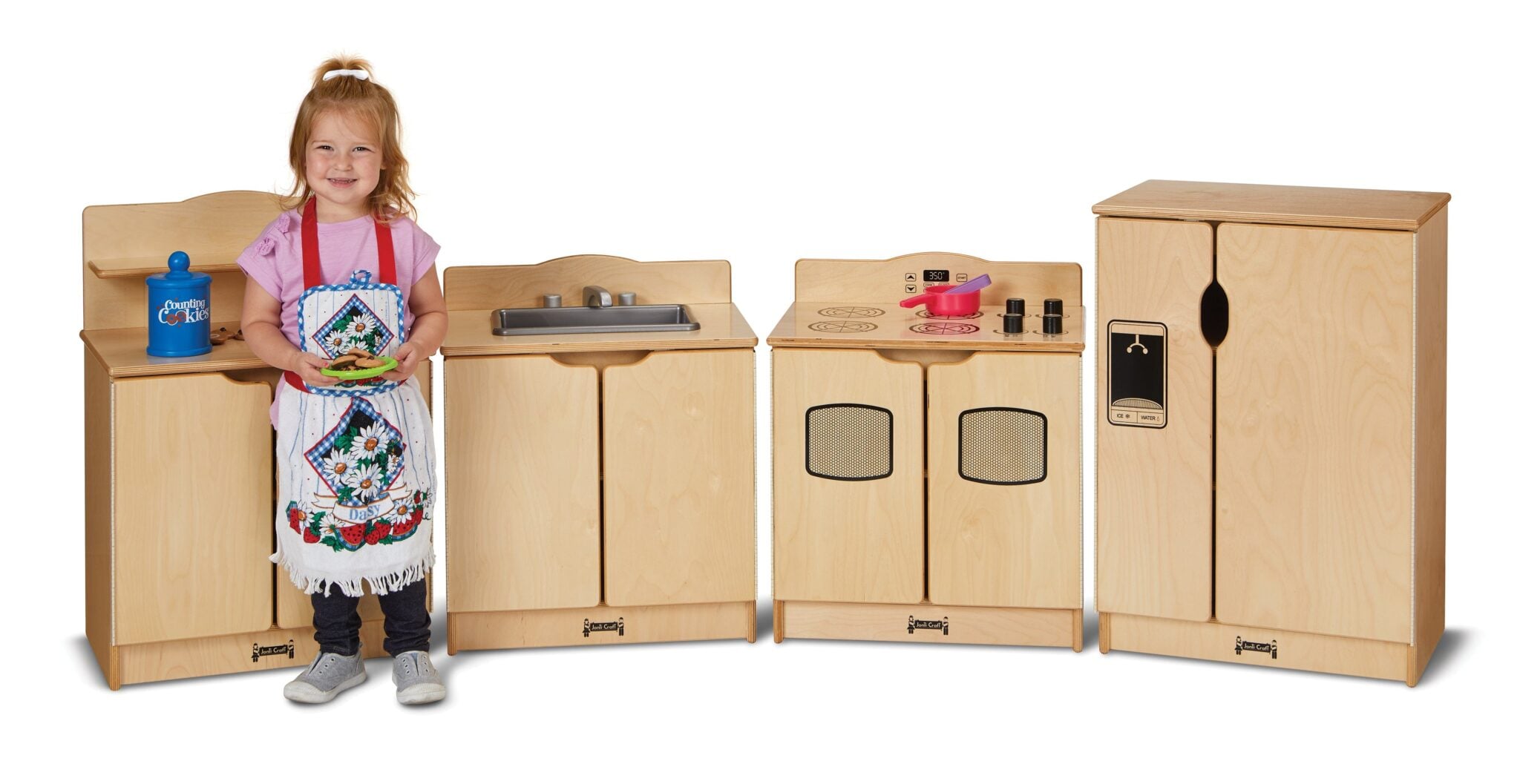
While it’s a pretend play area, realistic furniture helps bring imagination to life. It helps kids ground their play time in reality, giving them a place to launch their ideas.
Pretend play furniture also needs to be durable, rugged, and easy to clean. Look for items crafted from wood or strong plastic. They’re easy to wipe down and disinfect regularly while being tough enough to stand up to whatever your class throws at them.
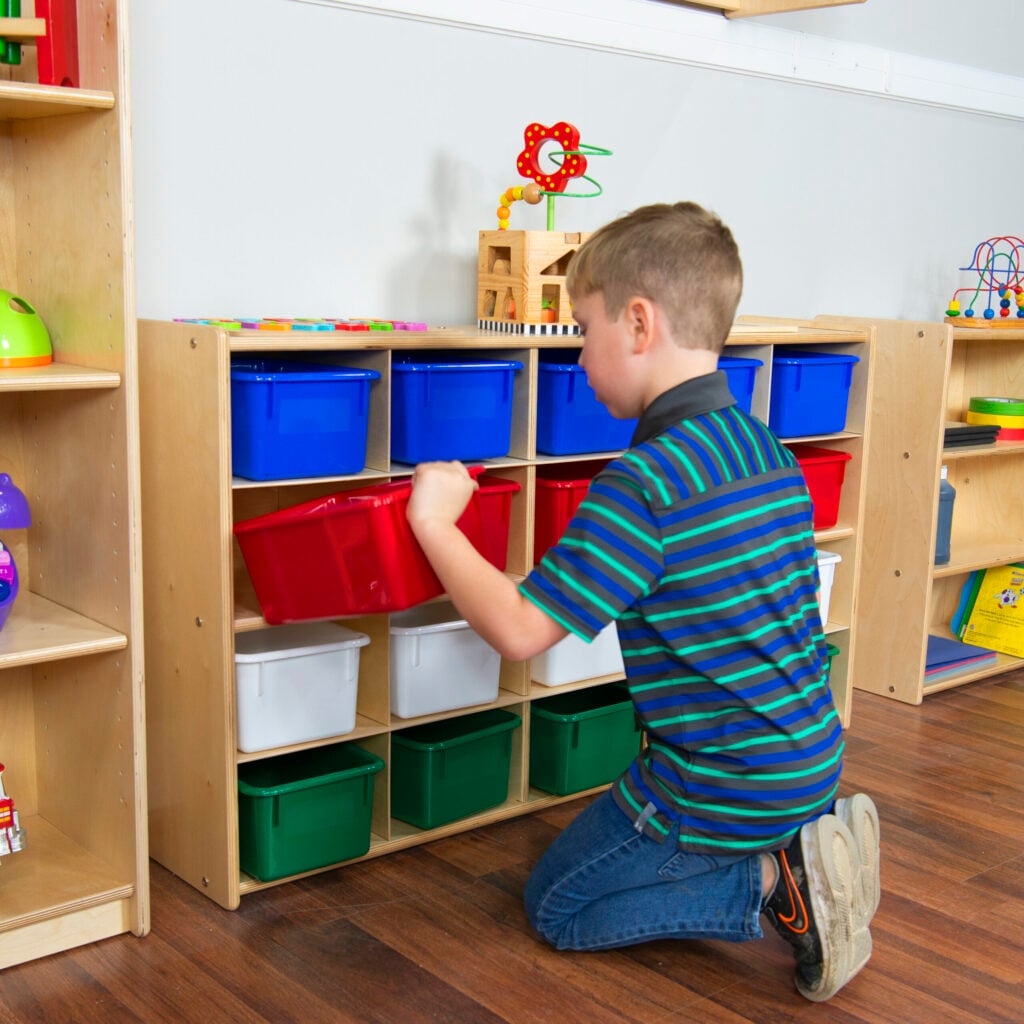
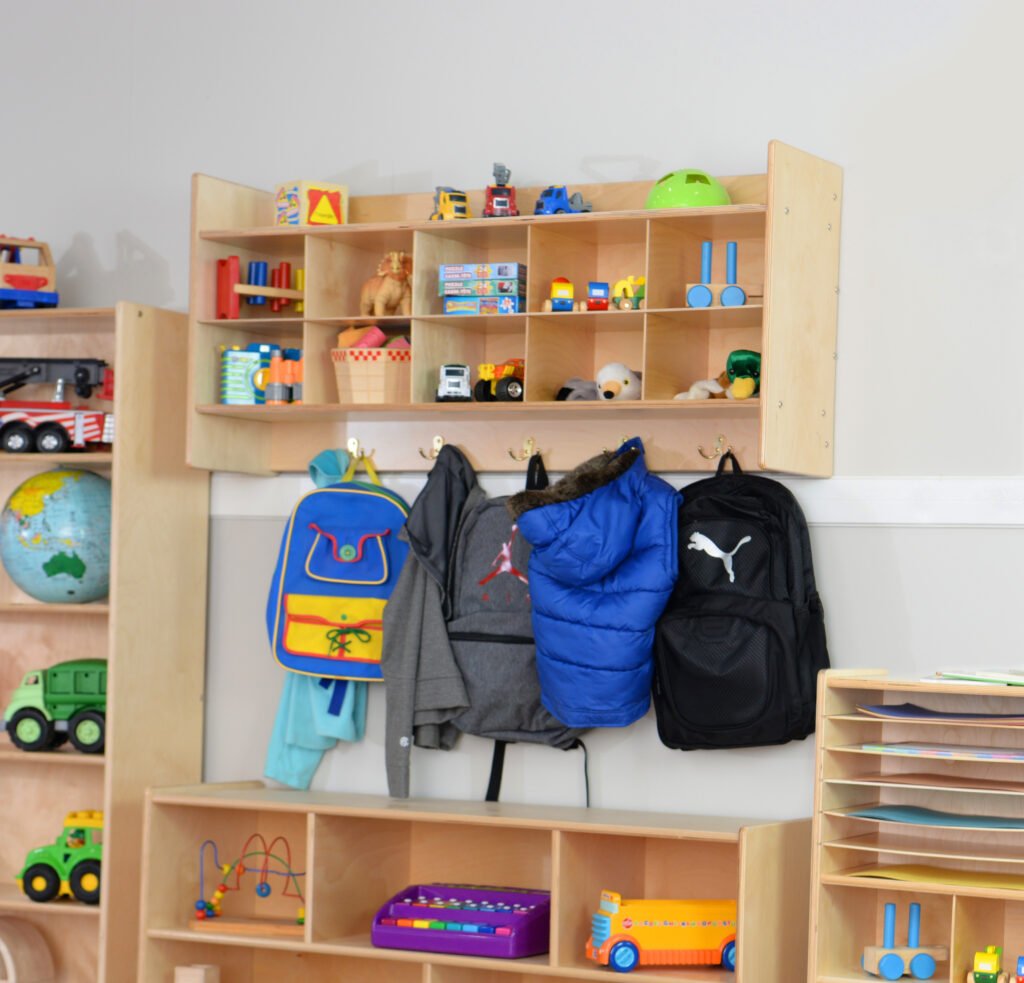
Also consider storage. Some play furniture items can do double-duty. The shelving and cabinets in a kitchen can store props and other items, while a dress-up organizer can keep costumes neat and tidy.
Include Various Props & Toys
Including play food with kitchens and puppets with a puppet theater are a good place to start, but getting creative with the props and toys you include in your pretend play area can take it to the next level.
For kitchens, add cookware and table settings and consider adding some unusual costumes, like astronaut or zookeeper to your lineup. The options are truly endless to keep pretend play fun and exciting for children.
Rotate Items Out
Kids love familiarity and routine, but they also like exploring new things. When possible, rotate out your dramatic and pretend play props so kids have new items that can reignite their imagination and take their pretend play in a new direction.
Support Creative Learning with the Right Furniture
Pretend play in a classroom is important for reasons beyond “kids like to play dress up.” It helps them enhance the critical skills they’ll need long after preschool or kindergarten and allows them to develop the executive functioning skills they’ll need as they grow and develop.
Kindermark Kids has a huge line-up of high-quality dramatic play furniture, puppet play, costumes, props, and more. No matter what you’re looking for or your budget, we can help you outfit your classroom to make playtime a fun time.
Contact our team today to learn more about our pretend play and classroom solutions, or browse our full line-up of classroom furniture.