


A sensory table is a fun way to help kids build their fine motor skills, learn how to collaborate, and safely explore new textures and materials. But a sensory table is only as good as the items included with it. Water, sand, and rice are classic sensory table elements, but what are other good sensory table ideas?
We’ve got tons of ideas for every age group that can help inspire you.
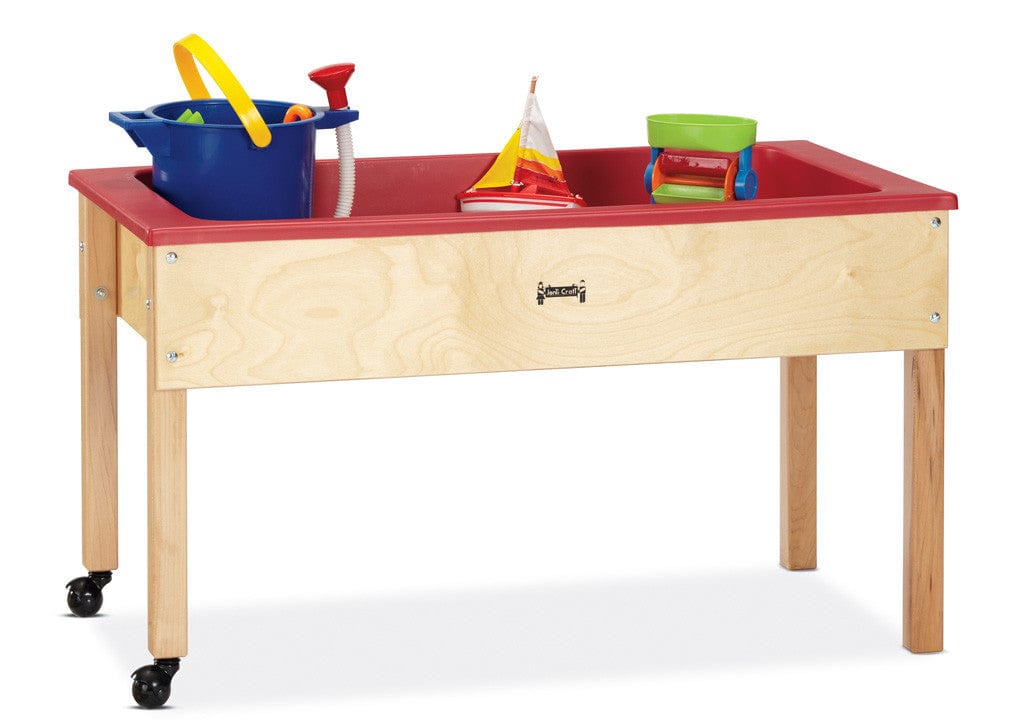
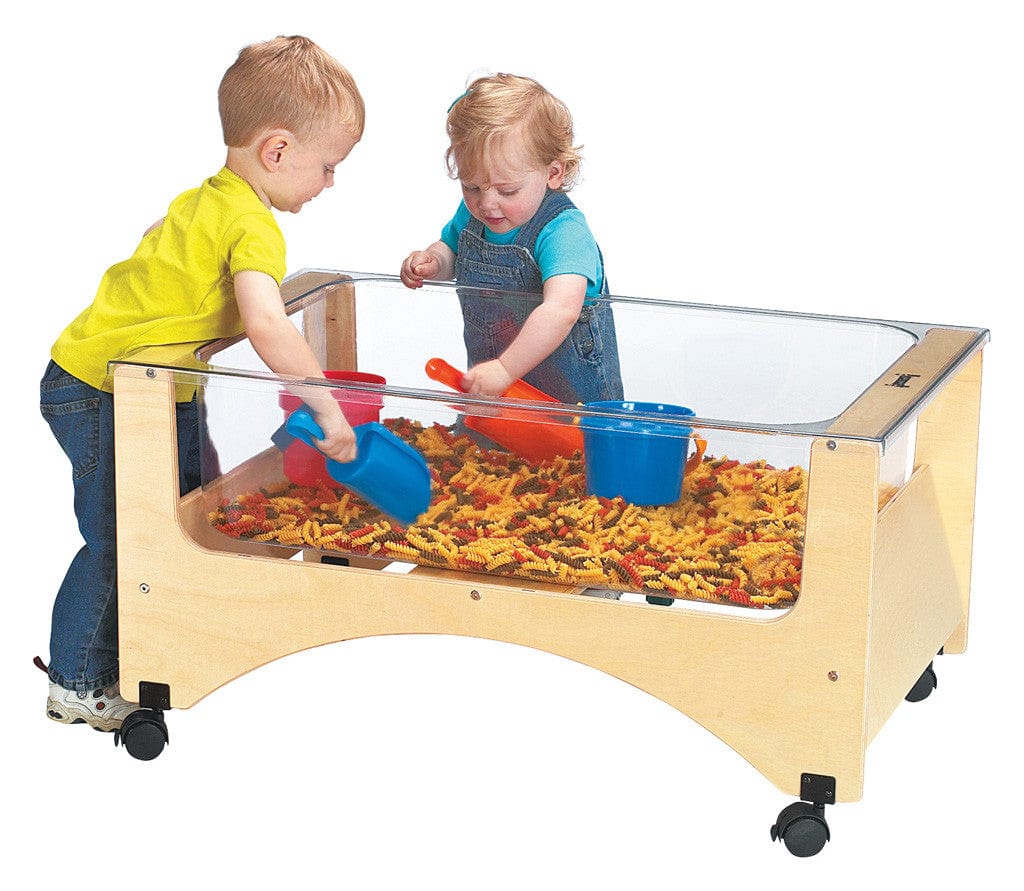
A sensory table is a very simple and basic way for young kids to explore, experiment, and play. It’s a child-height table with an attached bin or basin. The bin is filled with items kids can manipulate, like pouring, sifting, digging, stacking, or balancing.
While you could create a sensory bin without the table part, raising the bin to child height allows kids to stand instead of kneeling over the bin. It’s more comfortable and allows them to get the wiggles out! It’s also easier for several kids to use the sensory table at once and helps contain the inevitable mess to one spot.
Some people also consider activity tables a type of sensory table, like tables that have built-in bead mazes or other attached toys. Using your hands to move beads around a track is a type of sensory play, but these ideas are strictly for empty bins that encourage kids to use their imagination.
No matter what type of sensory table you choose (and you do have options), the play items will vary based on the age of the children. Here are some great sensory table ideas for kids of all ages.
Toddlers use sensory tables to explore textures and shapes as well as to develop fine motor skills and hand-eye coordination. Simple activities, like pouring water between containers or squeezing playdough, help toddlers practice using their fingers while learning basic concepts like full and empty or cause and effect.
Of course, they’re also notorious for using their mouths to explore! So, while the items should help toddlers develop their skills, it’s also important that whatever you include is nontoxic and not a choking hazard.
| Sensory Fillers and Materials | Tools and Containers | Toys and Accessories |
| Water (plain or colored) Soapy water Sand Wet sand Playdough and scented playdough Large fabric scraps Large sponges Large pieces of felt Large pieces of crinkle-cut paper Large sheets of tissue paper | Large scoops Measuring cups Large spoons Ladles Buckets and pails Large plastic bowls Large plastic cups Large funnels Large strainers and colanders Large paintbrushes Toy pots and pans | Large plastic animals Large toy cars and trucks Large toy boats Large building blocks Large toy food Large plastic flowers Large toy people and figurines |
By preschool, most children have some fine motor skills, but tools like tongs, tweezers, and funnels help kids further develop this important skill. They’re also more imaginative in their play, and might enjoy digging for dinosaur fossils or creating pretend meals. Sensory tables are also a great way for this age group to develop important skills they’ll need in kindergarten, like sorting, counting, and solving simple problems.
| Sensory Fillers and Materials | Tools and Containers | Toys and Accessories |
| Dry rice Dry beans Sand Kinetic sand Water (plain or colored) Soapy water Bubble foam Playdough Scented playdough Modeling clay Slime Wet sand Shredded paper Crinkle-cut paper Pom-poms Cotton balls Fabric scraps Felt Sponges Leaves Pinecones Large seashells Flowers Large rocks | Scoops Measuring cups and spoons Ladles Shovels and garden trowels Rakes Tongs Large tweezers Funnels Sieves and sifters Strainers and colanders Whisks Spatulas Squeeze bottles Spray bottles Paintbrushes Buckets Bowls and cups Muffin tins Ice cube trays Egg cartons Plastic jars Cardboard tubes Sorting trays | Plastic animals Dinosaurs Plastic insects Toy cars and trucks Construction vehicles Toy boats Toy people Toy food Toy kitchen accessories Building blocks Plastic counting bears Counting cubes Alphabet letters Number tiles Foam shapes Plastic counters Cookie cutters Toy gardening equipment Magnifying glasses Water wheels |
By kindergarten, sensory tables are perfect for more complex activities that combine hands-on exploration with early math, literacy, and science exploration. Children might sort and group objects, measure and compare quantities, or experiment with how water moves. Sensory tables also help them learn how to plan ahead and work collaboratively, critical skills for first grade and beyond.
| Sensory Fillers and Materials | Tools and Containers | Toys and Accessories |
| Dry rice Dry beans Sand Kinetic sand Water (plain or colored) Soapy water Bubble foam Playdough Scented playdough Modeling clay Slime Shredded paper Crinkle-cut paper Hole-punch paper scraps Pom-poms Cotton balls Fabric scraps Ribbon Felt LEGOs Bubble wrap Aluminum foil Sponges Leaves Pinecones Seashells Flowers Moss Large rocks and pebbles | Scoops Measuring cups and spoons Ladles Ice cream scoops Melon ballers Shovels and trowels Rakes Tongs Tweezers Squeeze scoopers Funnels Sieves and sifters Strainers Whisks Turkey basters Pipettes and droppers Squeeze bottles Paintbrushes Bowls and cups Plastic jars Muffin tins Ice cube trays Egg cartons Sorting trays Cardboard tubes | Plastic animals Dinosaurs and dinosaur skeletons Plastic insects Toy cars and trucks Construction vehicles Toy boats Toy people and figurines Miniature buildings Building blocks Plastic counting bears Counting cubes Linking chains Alphabet letters Letter tiles Number tiles Foam and plastic shapes Plastic counters Mini erasers Buttons Plastic gems Puzzle pieces Cookie cutters Craft sticks Toy coins Magnifying glasses Water wheels Color-mixing containers |
The wonderful thing about a sensory table is that it’s basically a blank slate. Fill it with sand, rocks, and dinosaurs, and it’s a prehistoric playscape or scientific dig. Fill it with water, funnels, and cups, and it’s a beaver dam in action.
But while the only limit to what you can do with a sensory table is your imagination, what you should look for in one includes a pretty standard list. Safety, durability, and convenience features are all critical foundations that ensure you get the most out of your sensory table.
Most sensory tables are rectangular-shaped, but they should have rounded corners and edges. Kids will likely lean and bump against those surfaces when they play, and the rounded profile will go a long way toward preventing bruises and scratches.
Also look for a sensory table with a wide base and heavy legs to help prevent tipping during playtime.
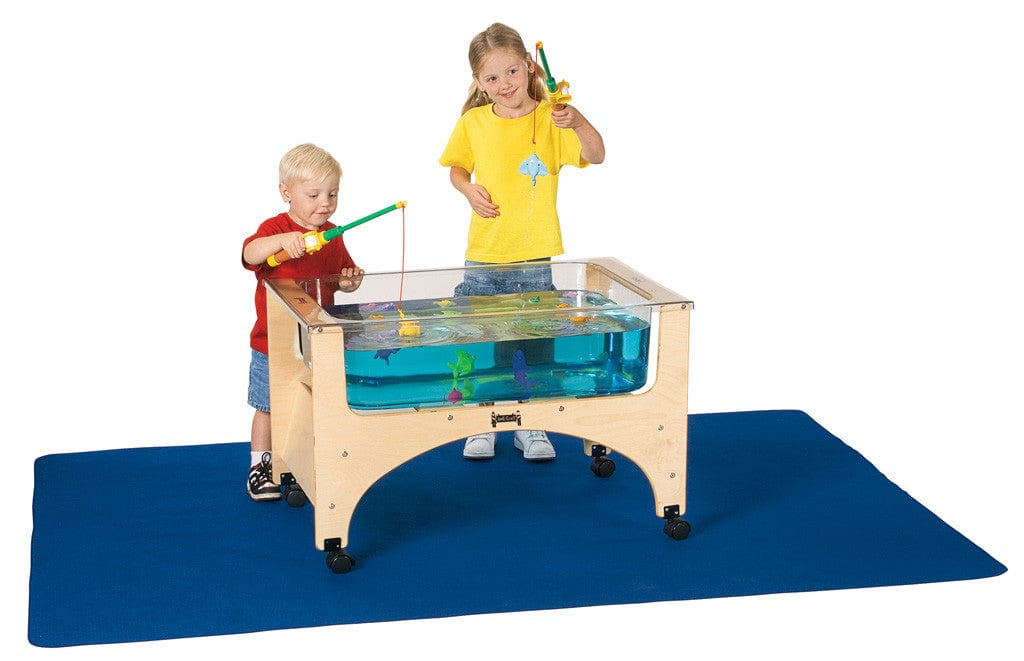
Sensory tables generally come in wood and plastic. Both are easy to wipe down and keep clean, as well as durable and long-lasting. However, plastic sensory tables are better for water play. Wood tables look nice, but even with a decent sealcoat, water is more likely to damage, warp, and mold the wood over time.
Most sensory tables come with built-in storage, but not in the way you might think. For example, a water or sand table may be its own storage unit. Simply pop the top over the bin when play time is over, and that’s that. But a LEGO table doesn’t work quite the same way. If you don’t want to leave the bricks out overnight, look for a storage drawer or bins underneath the table to ensure the parts and pieces stay nearby.
Particularly for sensory tables that are used primarily with water or other messy substances, consider bins that are easy to drain and clean. For example, a built-in bottom drain makes it easy to pull the plug and drain water into the grass instead of lifting the bin to dump in the sink. However, removable bins have the advantage of being, well, removable. You take the bin out of the table, wash it out, and pop it back in the table when you’re done.
In addition to the above-mentioned features, also consider sensory tables that:
Sensory tables are a great way for kids to explore the world around them while containing the mess to one container. They allow them to conduct safe and fun experiments and develop the critical math and literacy foundation they need as they continue their education.
Kindermark Kids has an extensive lineup of sensory tables, activity tables, and just about everything you need to create a learning environment that helps kids thrive. Contact us today, and our experienced team will help you find the right sensory table for your classroom or browse our full lineup of early educational products.