
A well-organized classroom is more than just tidy shelves and neatly stacked chairs. It’s the foundation of successful learning. In early childhood and elementary education, classroom design, layout, and furnishings impact how children engage, behave, and achieve academically.
When teachers run a purposefully organized classroom, they create a learning environment where students feel safe, supported, and motivated. From preschool furniture that supports independence to library furniture that encourages focus, every piece plays a role in shaping children’s educational outcomes.
An organized classroom is more than appearance. It’s a tool for enhancing learning that reduces frustration, stress, and distractions for students and teachers. Here’s how classroom organization supports student engagement and achievement.
Cluttered classrooms make it difficult to find what you need when you need it. But when classroom furniture and learning materials are placed with purpose, you can find what you need quickly and focus on the task at hand.
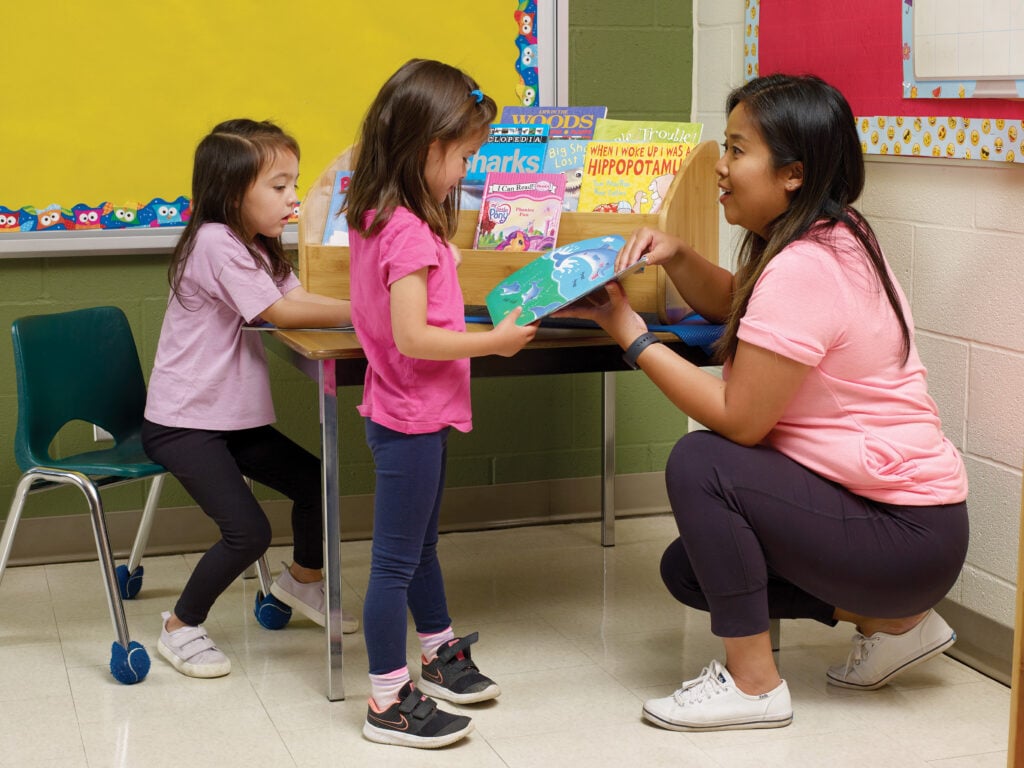
For example, keeping a kid-sized table and chair near the small motor activity toys gives kids a convenient place to play and makes transitioning from play time to focus time easier.
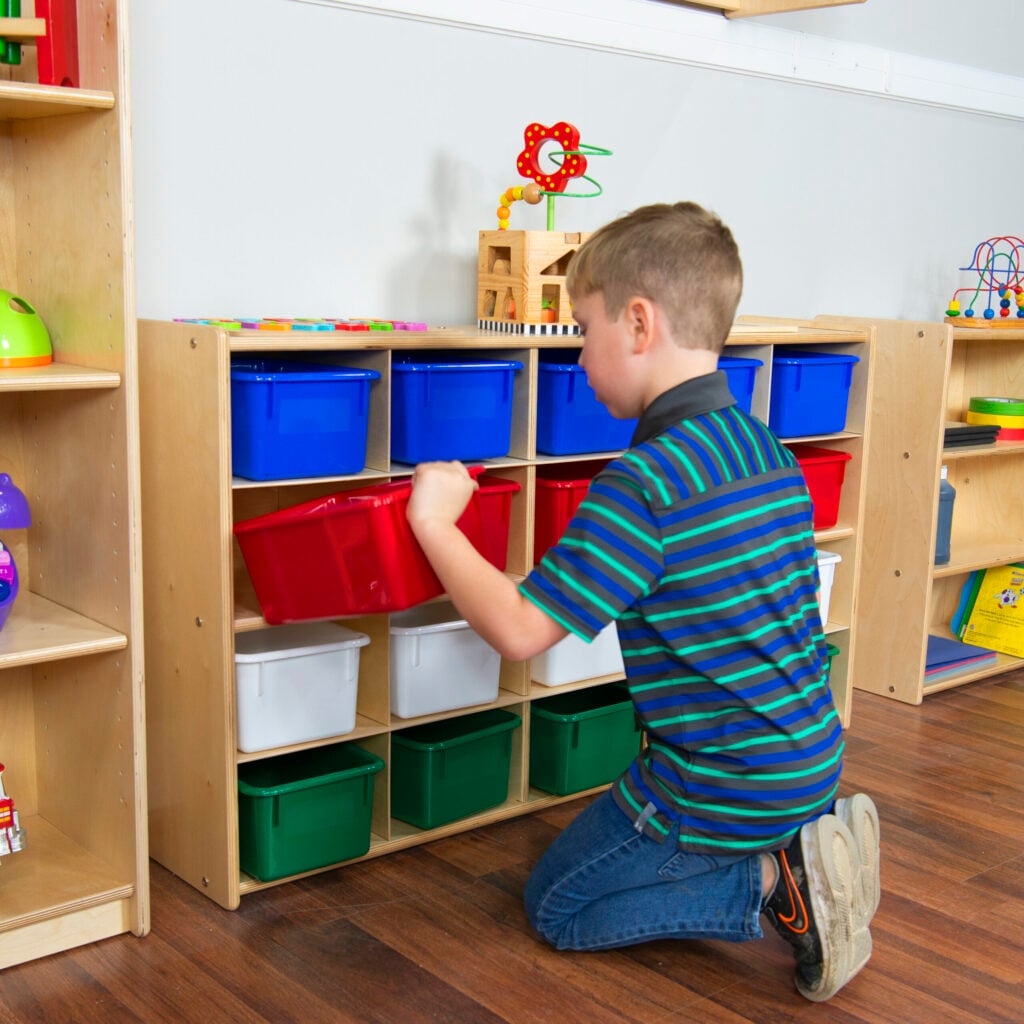
Montessori learning materials are a great example of how an organized classroom promotes independence. When children know where to find their books, toys, or games, they take responsibility for their own learning and know exactly where things go when it’s time to clean up.
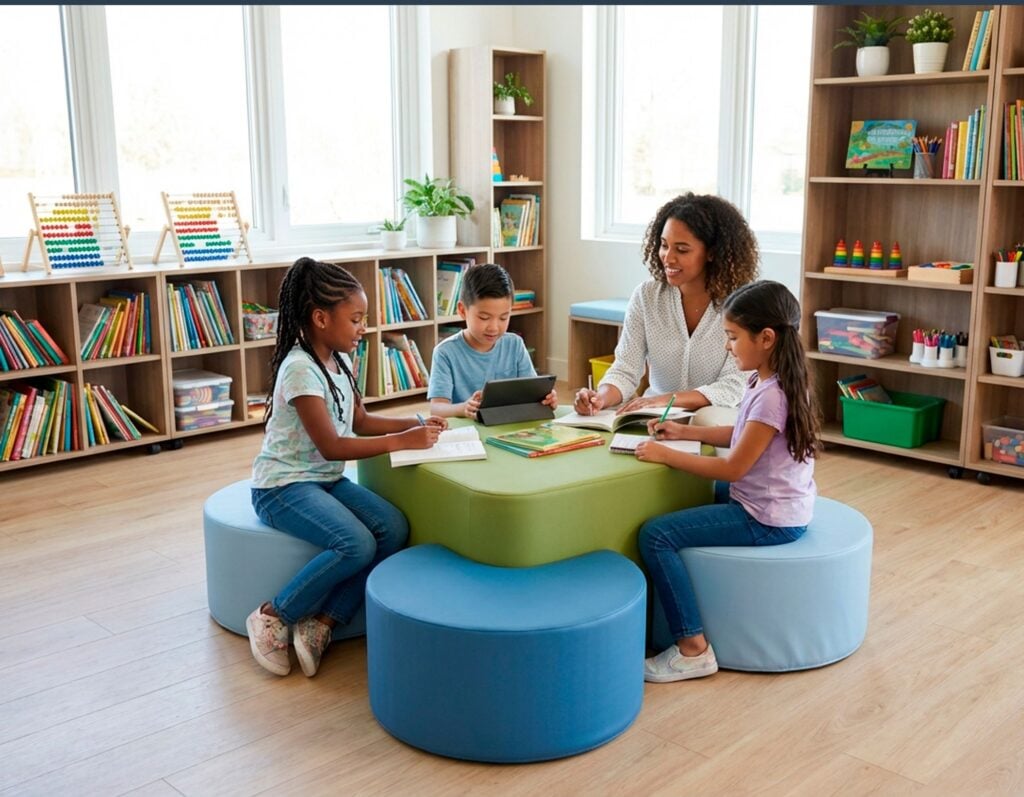
Clear pathways, structured seating areas, and zones for quiet or active play help children understand classroom expectations and help reduce behavioral challenges. They know that when it’s quiet reading time, they need to stay away from the noisy toys, and where to find supplies when they’re doing craft projects.
What’s more, the less time you spend helping your students find what they’re looking for, the more time you can spend doing what you do best: teaching every one of your learners!
How and where you place everything in your classroom impacts learning every day. Here’s what to consider when organizing your space.
Arrange your classroom furniture to allow clear movement around the room while creating defined activity spaces.
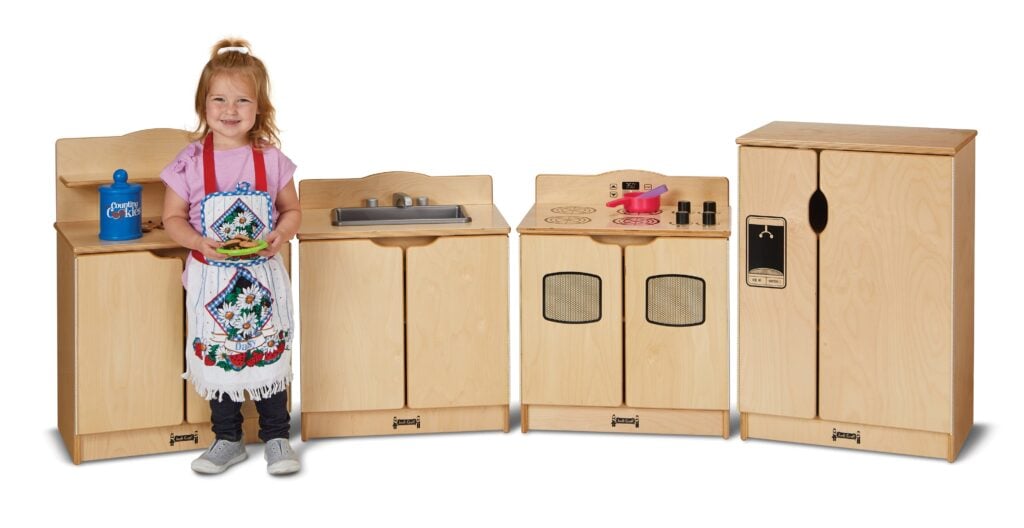
Tables and chairs should be close enough to encourage collaboration and sharing but still provide enough personal space for every child to work and not feel crowded. Other areas should be set aside for things like a quiet space, using bookcases, reading nooks, or lofts. Maximize your space and use the corners for focused play, like a dramatic play area and a science zone.
And don’t forget a place for everyone to come together for group activities, like a classroom rug for everyone to sit and share.
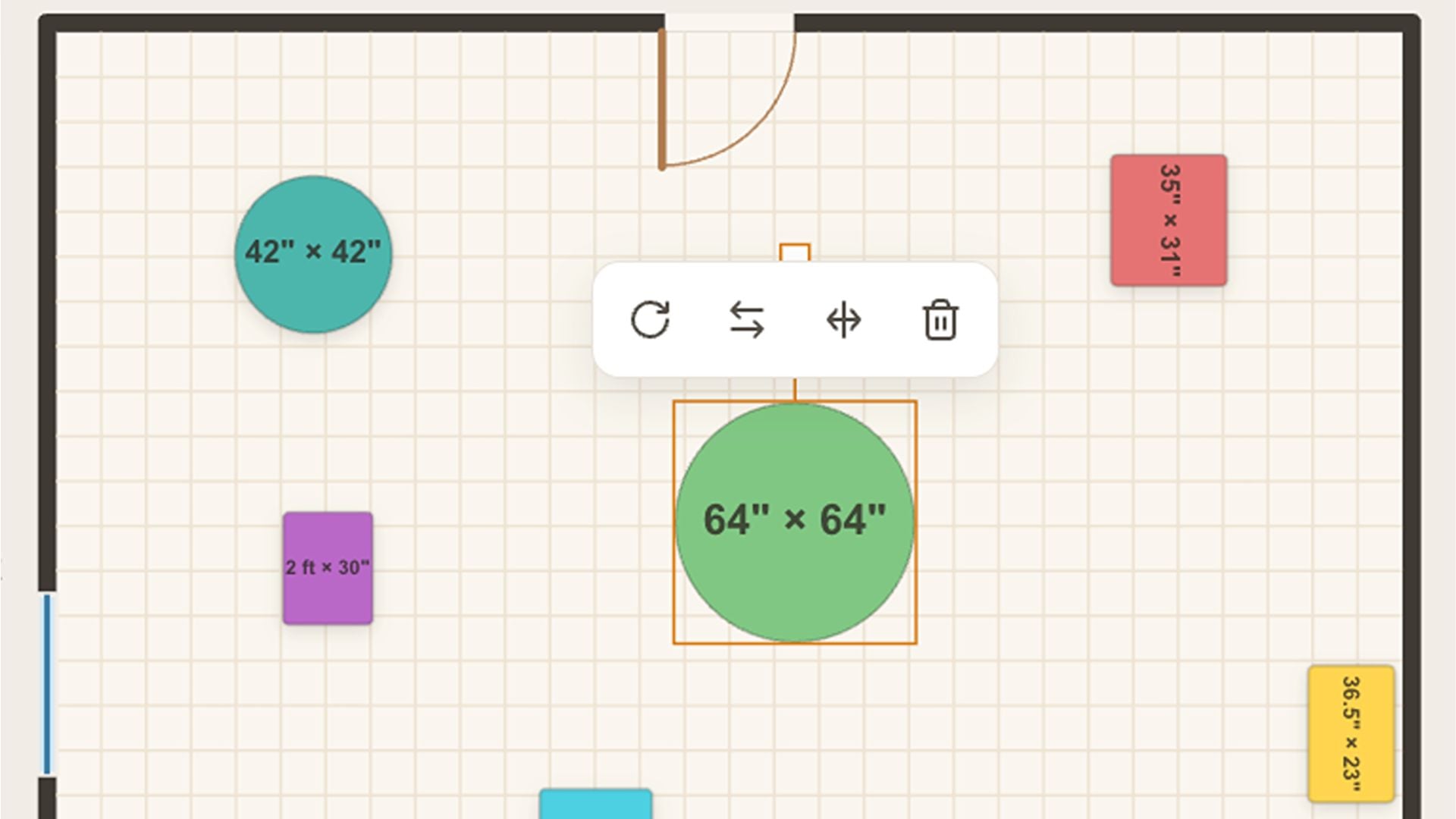
Not sure what furniture to put where? Our space planning tool can help!
If your space is small, oddly shaped, or you just want options, consider flexible furniture for your classroom. Storage cabinets on wheels let you have what you need close by, then roll them out of the way when not in use.
Room dividers and partitions let you wall things off when you need privacy and open them up when you need the space. Reading lofts let you make use of the vertical space and give kids a fun place to hide out for quiet time.
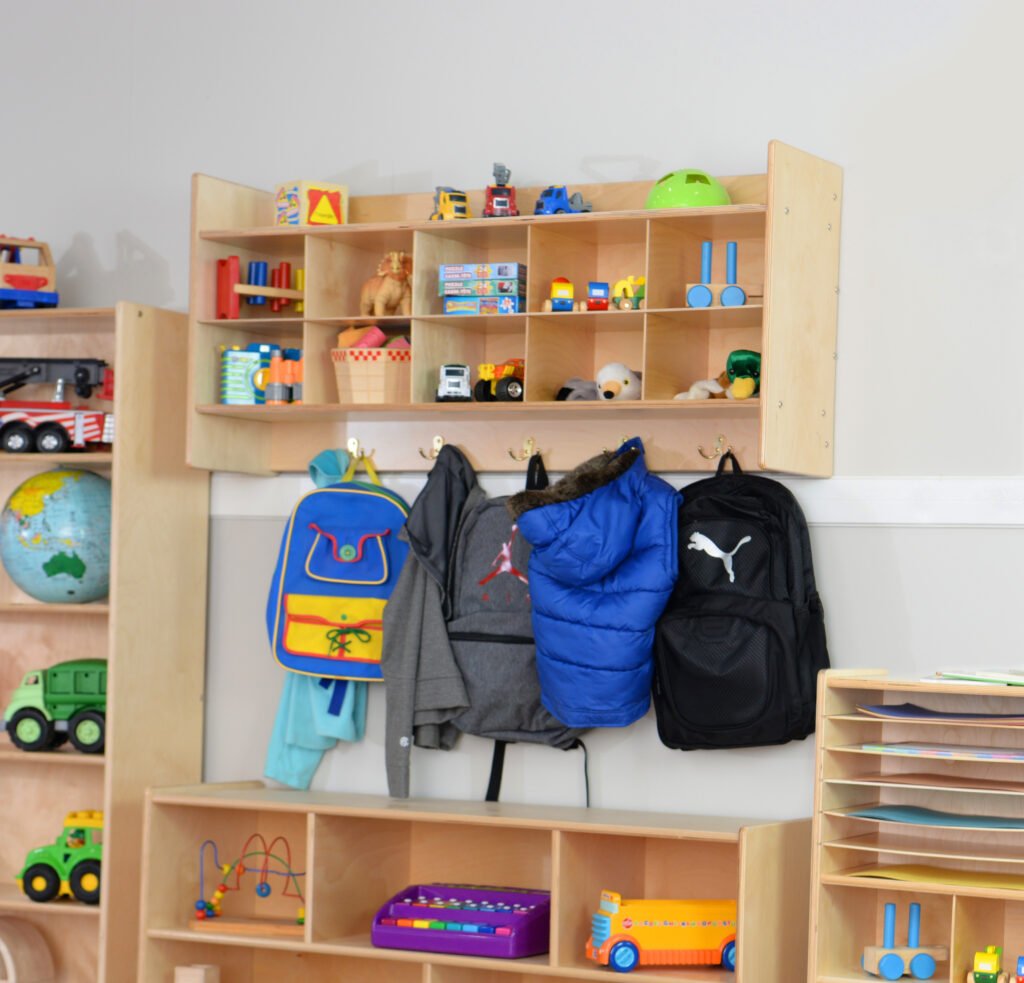
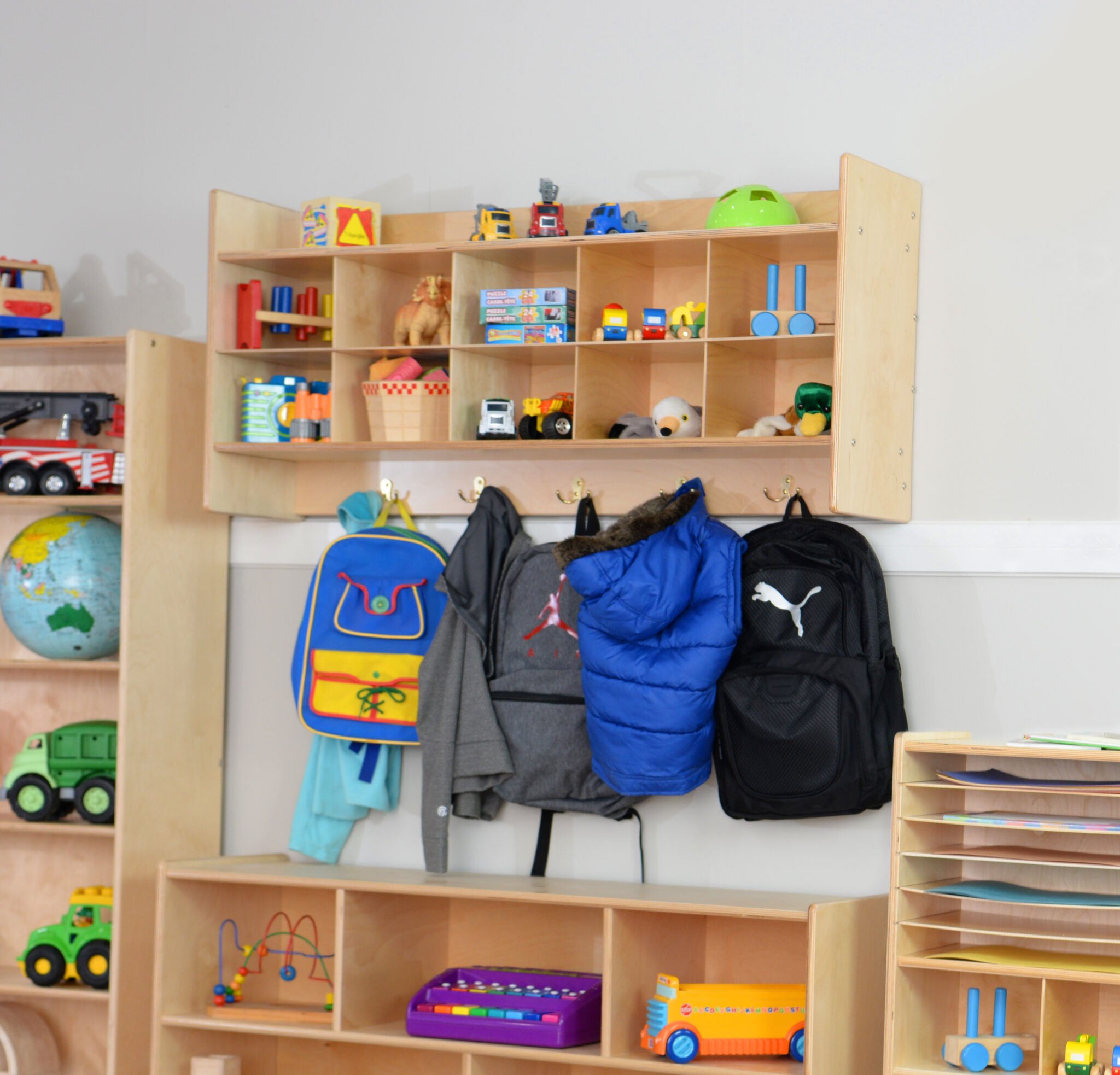
Most of the storage in your classroom should be accessible to children, encouraging them to find and use materials on their own, then clean up when they’re done. Consider including:
An organized classroom is more than neat — it’s purposeful, functional, and transformative. When every piece of furniture and every space is arranged with intention, children can focus on what matters most: learning and growing.
No matter the size or shape of your classroom, we’ve got fun, flexible furniture and storage items that help you design a learning environment that’s organized, clutter-free, and fun. Check out all of our classroom storage solutions or contact us today to learn more. We’ve got something for every teacher and every budget!